Tuesday, 15 April 2014

The majestic and the miniature


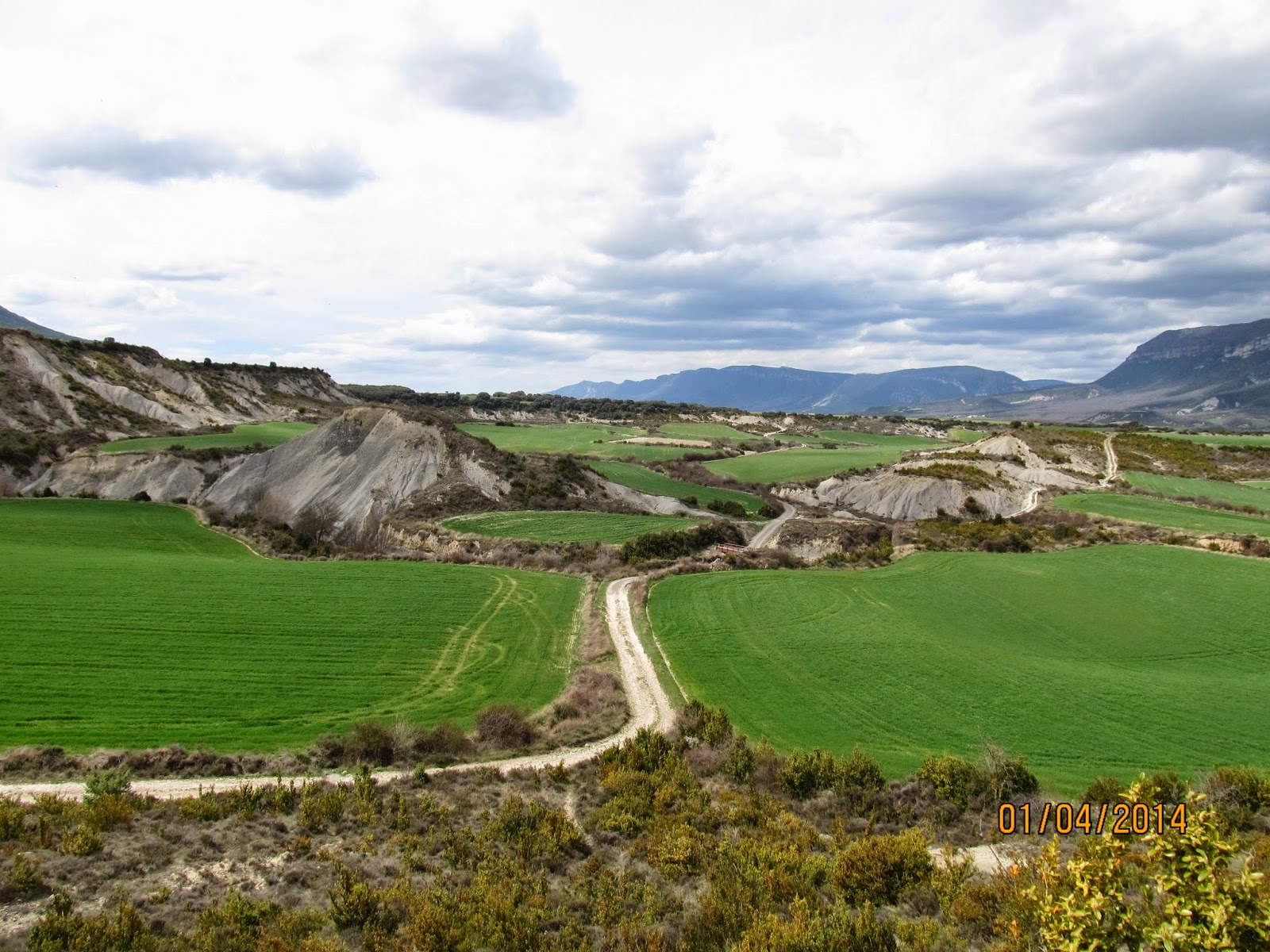
Our senses are sometimes on overload as we see magnificent landscapes stretching out before our eyes. The views from the top of a hill can quickly outweigh the pain of climbing to the top. The following are a few examples of the vistas that stretch out before us.


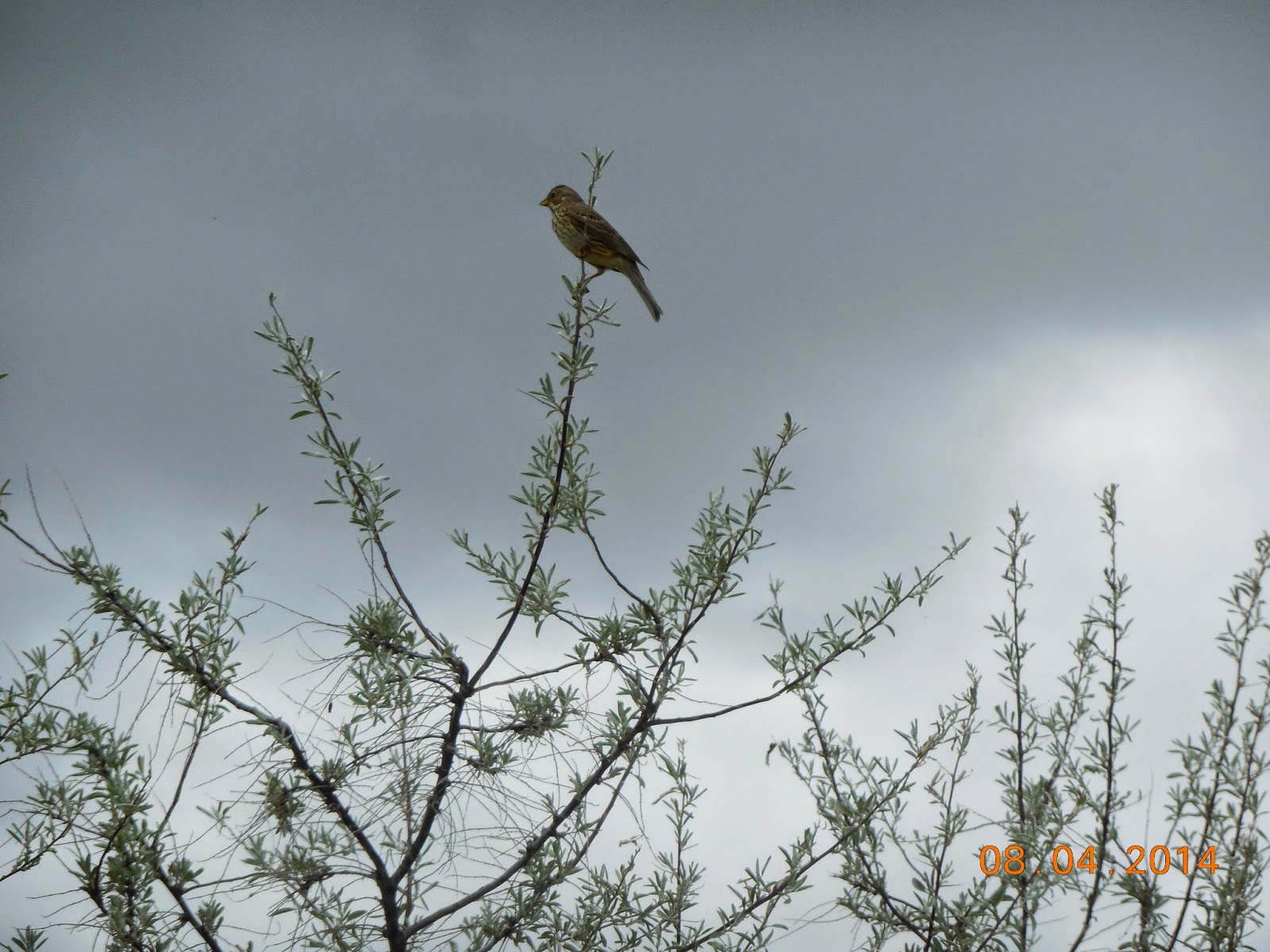
At the same time there are the small things that catch our eyes: flowers on the wayside, trees covered in spring blossom, a bird singing its chorus or storks nesting in the church steeples. 
Walking gives the perfect opportunity to appreciate the natural landscape that opens before us each day.
Looking down on stork nests in a church steeple. From this perspective we were able to see the young storks,


 These white flowers lined the road side for many kilometres, and blossom directly from a thorny bush

 
 Golden snails


Spring wild-flowers


Gardens have tulips of all colours emerging and in blossom

Halfway happenings


In a few days’ time we’ll be at Burgos, a city near the top of Spain and halfway across. It’s also approximately our halfway mark. We’ll have walked for 28 days (+ four rest days), and have maybe three weeks of walking + a few days’ time out until we reach Santiago by mid-May. We’ve already walked about 500 km.

So what’s happened since our last blog post?

We took a rest day at Logrono, a vibrant city, and the capital of a small province. It reminded us of a mini –Melbourne, with stately buildings, parks and lots of eating places. It was here that Bob chose stewed pigs ears for one of his meal options, and thoroughly enjoyed them.


It’s actually been a lot more straight-forward and predictable since our route joined the French Way (Camino Frances) at Puento la Reina. Our travel days have been shorter – though sometimes more exhausting – and the whole notion of ‘pilgrimage’ has become just all so much more structured and commercialised. This is all of necessity, since hundreds of pilgrims pass through the route each day, each needing accommodation, food, and for some, back-up transport, first aid and more.


For us, there is still the satisfaction of doing it slow through the changing landscapes, with the added dimension of social interaction with fellow-travellers – some of whom we meet up with again after a few days journey. That’s quite nice, and is often written up in the Camino books. The varying landscapes can be seen in the photos – changing from almond orchards to vineyards, cereal crops, beans and peas. We guess that much of the agricultural production is for ‘invisible’ pigs, sheep and cattle. Invisible because they seem to be housed in industrial style sheds, and rarely if ever let out to graze. Indeed, if ever we see a paddock fenced it’s something to remark on!


The rural landscapes are punctuated by villages (just the European name for towns). The villages are invariably very old, complete with cathedral and narrow streets. It can be a bit disconcerting to enter a village: usually our pilgrim path enters through the back door, with no signage to indicate which village it actually is. Then there’s no street signage to indicate where shops are, or indeed any other services. We now ask – in our expert Spanish – if there is a small shop or supermarket anywhere in town. That doesn’t mean that the shop is open. Trading hours are often say 10:00 till 2:00 and again from 6:00 till 8:00 pm. Not so handy when we arrive at 3:00 and want to buy food to cook and eat by 7:00 pm.


Toilet talk. There are no public toilets. We get around this situation along the way, firstly not drinking to excess, and secondly by noting and using where necessary, isolated places. In villages, one can go to the local bar/café where for the courtesy of a token purchase of coffee, you get to use their toilets.


We’ve been a little surprised that we notice nothing overtly pilgrimage-like among the many people we now meet each day. Indeed, the only hint that the walk has religious significance for our fellow-travellers was the exclamation from one exhausted lady upon entering her destination village ‘Thank God I’ve made it!’ (Actually her words – expressing somewhat more devotion – were: Thank you Lord, thank you Jesus!).


Indeed, many of our fellow pilgrims experience and endure considerable physical pain in the weeks of their journey. We’ve met an English lady whose severe tendonitis in her calf ligaments had her hobbling painfully for many km. Yet she persisted in continuing. X#*! Pom! Many others sport bandaged, blistered toes and feet. One chap developed an eye problem and has had to fly back to the US one week into his five week trek.


For our part, we are in good shape. A real blessing. Our health, energy and strength are supported as often as possible with Anne’s cooking – about 70% of the time – or with three-course meals ‘pilgrim’ available everywhere along this main pilgrim route. A bottle of wine is supplied with every pilgrim meal, and we try hard to keep up our refreshment needs. I wonder what one bottle of wine per day X sixty pilgrimage days come to?


Thank you to those who have responded to our blog postings. As it’s a somewhat complicated process for us to access and respond to these, we suggest that if you would like to comment –a little less publicly than on the blog site – you could use either of our email addresses; rimacz@gmail.com or annemacz@gmail.com. Also, let us know if there are things you would like to hear about that we haven’t yet covered.
 
The following photos are a taste of what we see:


 A sheep-shed

 The main drag in Logrono


 Part of an altar in Logrono cathedral


 Hamburger and chips in Logrono


Full altar in Logrono cathedral


 Church building in the main street of ?


Who's for pigs head and who's for wurst?


Or maybe you prefer the piggie that went to market!


 Let's think that over


 A grand statue in Logrono


 More nightlife in a 'tapas' street in Logrono


A good old Hills Hoist high above a Logrono street


A little black bull presiding over a valley


 A typical rural landscape and village


Just 576 km to go!


A village square with its cruelly-pruned trees
(I don't know what species, but they are everywhere, all pruned the same)


Cemetery outside a small village


Viticultural landscape


Overview of a typical village


More, more vines


An overcast day along the never-ending road

Farm buildings


Landscape and commemorative cross


More landscapes and pilgrim paths

 One of many hay-stacks, often 14 bales high


 Storks at Belorado
 
 
 Morning light at Belorado

Snow-capped peaks

Tuesday, 8 April 2014

Milestones and mud


Our experiences since the last blog post have been quite amazing …

The adventures started with our train ride from Huesca to Jaca. We had decided to do this in order to avoid being mid-way through an isolated, poorly serviced section of a national park track during a period of forecast rain several days hence. This was a really good idea, and we loved the luxury of wonderful views without expending any energy! The journey took us firstly through the same sort of agricultural areas that we’d walked through for two weeks. Then a climb up through a gorge in the foothills of the Pyrenees – a gorge we’d seen from afar in preceding days.

We see this sort of scenery every day on our walk and have stopped taking pics


After two hours of train extravagance, we arrived at Jaca, a town that is a few days’ walk in from France on yet another Camino route (the Aragones way). We arrived at noon, and made our way through the town and onwards to our night’s accommodation some 15 km away. This all worked out really well – high country agricultural vistas, complete with shepherd tending his sheep, some of which had bells, whose constant melodic ringing evoked memories of children’s stories from Switzerland.

The next few days merge into one.

Adventure 1:
This day put our fitness to the test. After a night’s rest at a town called Artieda, we first walked about ten km to Ruesta, an ancient village, now largely a ghost town. That was OK. We dawdled there over lunch, expecting ahead more of the same sort of paths, gradients etc we’d grown used to. Instead, after descending about 50 metres, we started regaining that altitude. That’s the easy part. We climbed that 50 metres, then 100 metres, 200 metres, on and up, ever onwards, ever upwards, eagerly seeking a glimpse around each bend in the winding road, so we could congratulate ourselves on winning the battle against muscular fatigue. But each new curve brought yet another distant crest into view, dread to our minds, and played havoc with our determination to win. Well, I think we lost. No, I think we won. After seven km and four gruelling hours (about 2:00 pm) we finally did in fact reach the crest of the mountain range and ‘collapsed’. We gratefully ate our 'bocodillos' , and slowly, slowly regained our determination, and in fact satisfaction, that we are indeed strong, successful adventurers yes?


The next day was equally adventurous – what an innocuous word. This time we were treated to a four hour slog up a hellish mud path – not just wet, dirty mud – but sticky clogging mud that stuck to our boots (maybe 500 gm per boot), coated our trouser legs with mud, built up as a thick second-level sole under our boots, making our foothold slippery when we managed to find a more stable base, threatened to up-end us or dislocate our backs if we were to slip. All the while, rain was threatening, a chill wind was blowing, we had no idea for how much longer this upwards torture would continue, and not another soul in sight to save us if something were to go wrong.


Having given up on reaching the crest of this interminable climb, we paused at 2:00 pm for lunch in a deserted cattle shed. Its smell was reminiscent of our childhood farms, so this revived our spirits a little - maybe.
 
A solitary Austrian hiker travelling in the opposite direction informed us that our next town was still six or seven km distant – cold comfort.

Incidentally, on our slog through the mud, we were following two other sets of footprints. These turned out to be those  Frenchmen – aged just ten years older than us – and when we met up with them that night, of course they too were exhausted and had in fact slipped and fallen a couple of time. So we were grateful for our physical (and mental) strength and fitness, that only a little light rain fell and for our safety while slogging through that long, arduous and lonely quagmire.

Post script. We did survive to the summit of that climb. We arrived cold and weak at a village ten km short of our destination, where a phone call in my very best Spanish resulted in a taxi arriving half an hour later to take us to a hostel in Monreal. Hot showers, whiskey, soup, salad, red wine, roast meat and dessert worked their magic and we slept like babies.
 

Next morning was a fresh new day, sunny and bright, and fortunately we had revived. Not sure of the km distance to our next town (probably about 20 km), arriving in good time. Bob went to the local bar to enjoy his daily ration of whiskey, when an hour of Australiana appeared on the bar’s TV screen. The content included thirty minutes shot in SE Queensland, followed by a round of tourist attractions from all the states. It was a bit of nostalgia for the pilgrim who’d been away from his homeland for so long (four weeks …).
We have seen this sort of scenery every day and have stopped taking pics


Blissful rural scenes
 

Since then there have been no new adventures. Just continuing wonderful scenery, and congenial company among the numerous fellow-pilgrims who are trekking along the French Way section of the Camino. It has in fact been a small adventure to encounter the pilgrim throng that we are now part of. I shall explain. During the first three weeks of our journey, we travelled alone (with each other of course). Of the 23 nights, we shared the hostel accommodation with others on only three occasions, and basically met no others at all on the pilgrim path. Then abruptly, on day 24, after 350 km, our Catalan and Arogones Pilgrim Way converged with the more popular French Way at Puenta la Reina. What a change! Immediately there were dozens and dozens of men and women of all ages (twenties to eighties) clamouring to find a bed at a huge hostel of some 120 beds before it was all filled up. Aren’t we lucky that the Camino season starts only in June!


It was awful having to share the dorm with 15 women
 

Our most recent two days have been less eventful. Better paths, no chance of getting lost (lots of Camino arrows, emblems and fellow travellers. It’s been so good that we decided to have rest day (just ten km today). We are at a comfortable hostel where we are catching up on photo management, journal writing, and this blog.


 The way the Camino ought to for the whole 1,000 km


 A typical bar - café/bar/meeting place for the townsfolk, especially the men, who often play cards while drinking tiny cups of coffee. Or maybe spirituous liquor, at breakfast time ...


The main street (Calle Mayor) of Puente la Reina


 A typical bridge

 An exposed portion of a ridgy-didge Roman road


The same road


An ancient olive tree